Join me on my printmaking journey

Hand Printing with a Baren: The Art of Mokuhanga Printmaking Mokuhanga
In this blog post, we’ll explore the history, functionality, and techniques of using a baren in the Mokuhanga process.
MOKUHANGA
GG
12/10/20252 min read
Hand Printing with a Baren: The Art of Mokuhanga Printmaking
Mokuhanga, the traditional Japanese woodblock printmaking technique, has been captivating artists and collectors for centuries. One of the essential tools that play a pivotal role in this art form is the baren. A simple yet effective device, the baren is crucial for hand-printing the intricate designs and vibrant colors that define Mokuhanga prints. In this blog post, we’ll explore the history, functionality, and techniques of using a baren in the Mokuhanga process.
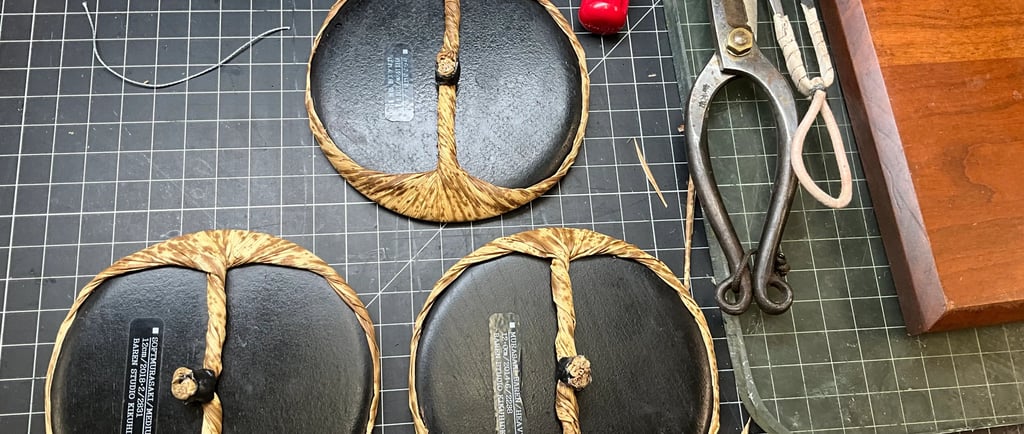
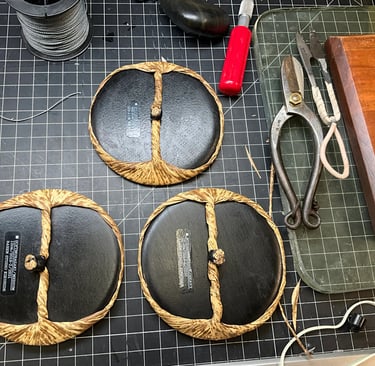
What is a Baren? - A baren is a round, disc-like tool traditionally made from bamboo and rice straw, although modern variations may incorporate materials such as plastic. It serves as a pressing tool for transferring ink from the woodblock to the paper during the printing process. In Mokuhanga, the pressure applied by the baren ensures a clean and even impression of the ink, allowing for the subtle nuances of color and texture to emerge.
A Brief History of the Baren - The baren has a rich history, tracing back to the Edo period in Japan when woodblock printing flourished. Originally designed to enhance the printing process, the baren allowed artisans to produce high-quality prints with greater efficiency. Over time, it became a symbol of traditional Japanese craftsmanship, with variations in design and technique emerging across different regions.
The Functionality of the Baren - Using a baren is both an art and a science. The device consists of a handle and a flat, textured surface that creates friction, allowing the artist to apply even pressure on the paper laid over the inked block. This pressure is essential for achieving the desired intensity and clarity in the print.
Advantages of Hand Printing with a Baren - Hand printing with a baren offers several advantages. First, it allows for a tactile connection between the artist, the materials, and the artwork. Each print can be slightly different, providing a unique touch to every piece created. Additionally, the ability to control pressure and technique enables artists to experiment with different effects, from soft gradients to sharp lines. The intimate nature of hand printing fosters a deeper appreciation for the craftsmanship involved. In a world dominated by digital processes, Mokuhanga printmaking with a baren highlights the beauty and value of handmade art.